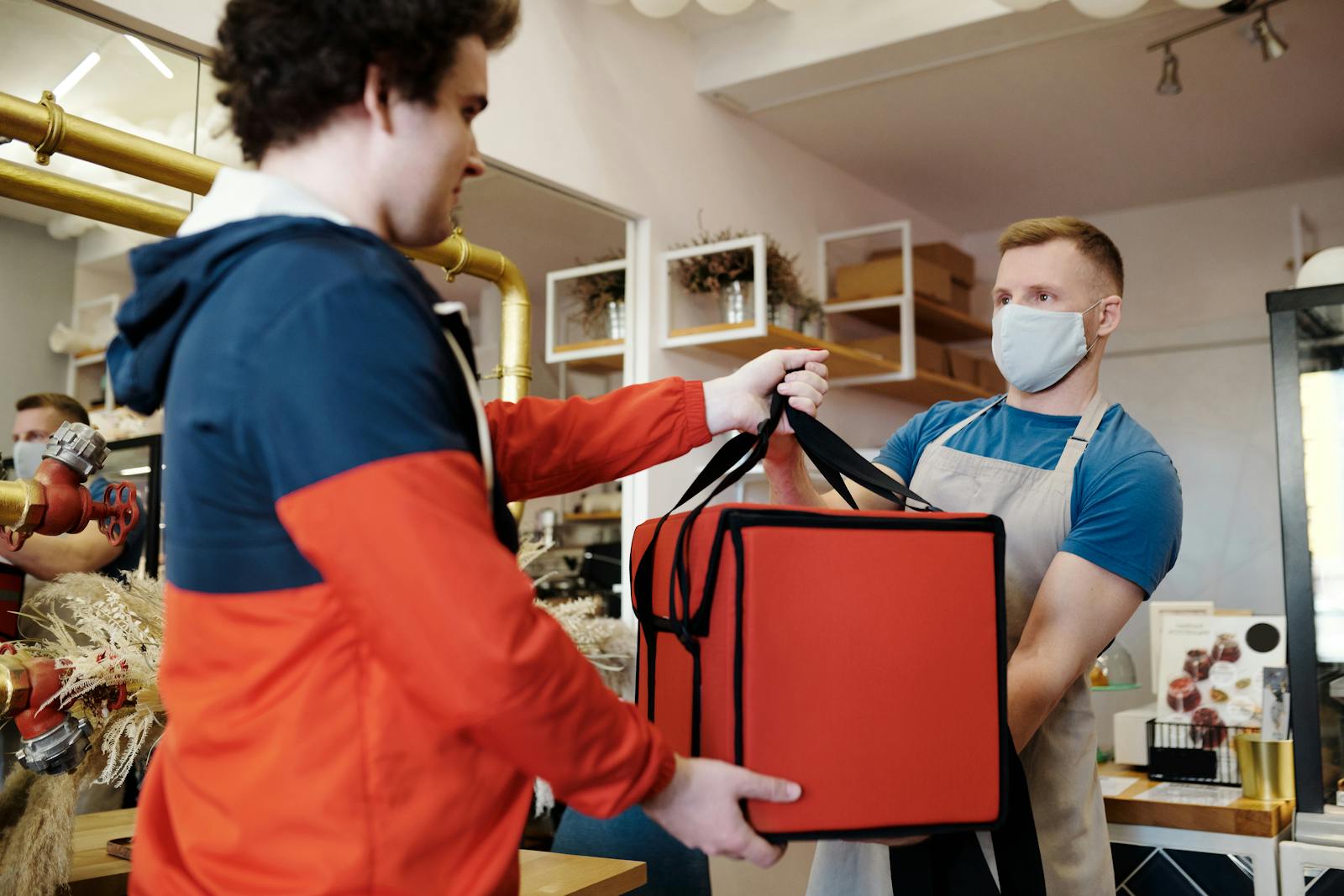
A real delivery and local-service image matched to the pickup-and-drop-off topic.
Pickup & Drop-Off Convenience Setup Service is a practical setup service for local businesses that want to offer pickup and return without building a complicated logistics operation. The client may already provide laundry, tailoring, repair, printing, pet care, or another service; your job is to organize the pickup request, time window, item handoff, customer updates, and return process.
The consultant does not have to become the courier. The business can use its own staff or an approved delivery partner. Your value is creating a reliable process that reduces missed pickups, lost information, unclear responsibility, and repeated customer questions.
Why this is timely in 2026
Customers increasingly expect convenience, scheduled service windows, and clear status updates. Many small local businesses can perform the actual service well but still manage pickup and delivery through phone calls, handwritten notes, or scattered messaging.
A structured system can improve convenience without requiring expensive custom software. Simple booking forms, item IDs, status stages, route rules, and customer notifications are often enough for a small pilot.
The business model
Sell a setup project that maps the full journey from customer request to final return. Define service areas, booking windows, customer information, item labels, status stages, staff roles, failed-pickup rules, proof of handoff, and return scheduling.
Keep transportation separate unless you are intentionally operating a courier service and have the required insurance, licenses, and procedures. The simplest version of this business is process design and implementation for the client.
Best clients to target
- laundries and dry cleaners
- tailors and alteration shops
- shoe, electronics, and small appliance repair businesses
- pet grooming and pet-care services
- printing, photo, or document-service businesses
- other local businesses that receive physical items from customers
Pick one niche first because item value, handling, turnaround, and liability can vary significantly between industries.
What to include in the offer
- service-area and pickup-window rules
- booking or request form
- customer contact and address fields
- item identification or tagging system
- status stages from request to return
- confirmation and status-update messages
- staff or courier handoff checklist
- missed-pickup and failed-delivery process
- simple daily dashboard or tracking sheet
Define what is not included, such as transportation, insurance, storage, custom app development, or payment processing, unless you are intentionally providing those services.
How to start step by step
- Choose one niche with a simple pickup-to-return journey.
- Map every step from customer request to final delivery.
- Create a basic booking form and tracking sheet.
- Define item IDs and proof-of-handoff rules.
- Build message templates for each status stage.
- Run a limited pilot in a small service area before expanding.
During the pilot, record every exception: late pickup, wrong address, missing item, customer not available, delayed service, and failed return. Those exceptions should improve the final SOP.
Pricing and margin planning
Use a fixed setup fee based on number of locations, service areas, item types, staff roles, required integrations, and the complexity of routing and notifications.
A simple package can cover one location and one pickup workflow. A larger package can include multiple zones, staff assignments, recurring pickup schedules, reporting, and integration with booking or customer-management tools.
If you add recurring support, price it separately. Monthly work may include message updates, reporting, route reviews, workflow changes, and staff retraining.
Tools and workflow
You can start with simple tools:
- online request form
- spreadsheet or lightweight CRM
- shared calendar for pickup windows
- item labels or QR codes where appropriate
- messaging templates for confirmations and updates
- daily exception log
A practical workflow is: request received → confirm zone and time → assign pickup → identify item → confirm arrival → service completed → schedule return → confirm final handoff.
How to find the first customers
Look for local businesses already offering pickup or delivery informally. Review how clear their booking instructions are, whether customers receive updates, and whether there is an obvious tracking process.
Offer a paid workflow audit with a simple visual map of the current process and a proposed improved version. A business owner can understand a clear before-and-after process faster than a generic “operations consulting” pitch.
SEO and content plan
Useful search-focused topics include:
- pickup and drop-off service setup
- local delivery workflow for small business
- laundry pickup system
- repair pickup booking process
- small business pickup tracking
- local delivery operations consultant
- pickup and return workflow
Build content around real buyer questions: how to set service zones, how to schedule windows, how to identify items, how to reduce missed pickups, and how to notify customers without constant manual messaging.
Helpful external resources
Mistakes to avoid
- using vague text messages instead of a defined booking flow
- failing to identify items clearly
- skipping proof of pickup and handoff
- offering delivery windows that the business cannot consistently meet
- ignoring failed-pickup and no-answer situations
- giving too many staff members access to customer addresses and contact data
The system should make responsibility visible at every stage. If staff cannot tell who has the item, what status it is in, or what happens next, the workflow is not ready.
A practical 30-day launch plan
- Week 1: choose one niche and map the complete customer journey.
- Week 2: build a demo form, status tracker, message templates, and handoff checklist.
- Week 3: review 20 local businesses and offer a paid process audit.
- Week 4: run one small pilot and record every delay, failed pickup, and exception.
At the end of the month, compare planned pickup times with actual performance and use the results to improve the next client setup.
How to grow without losing quality
Growth should come from niche-specific templates, better exception handling, clearer customer updates, and simple reporting. Do not add large service areas before the existing workflow is reliable.
Once the core process works, you can add recurring optimization, multi-location setup, recurring pickup schedules, route reporting, staff training, or integration work as separate services.
Frequently Asked Questions
Do I need to provide the delivery service myself?
No. You can sell the workflow setup while the client uses its own staff or a suitable delivery partner.
What businesses are easiest to start with?
Choose a business with a simple service area, limited item types, and predictable turnaround times.
Can this become recurring revenue?
Yes. Ongoing route reviews, reporting, message updates, workflow changes, and staff support can create recurring work where needed.
What is the biggest operational risk?
Poor handoff records and unclear responsibility for customer items. Item identification and proof of handoff should be designed before launch.
Educational content only. This guide provides general business information, not legal, tax, insurance, transport, safety, or compliance advice. Requirements vary by location and industry. Confirm any licensing, insurance, consumer-protection, data-handling, and delivery obligations before launching a service.